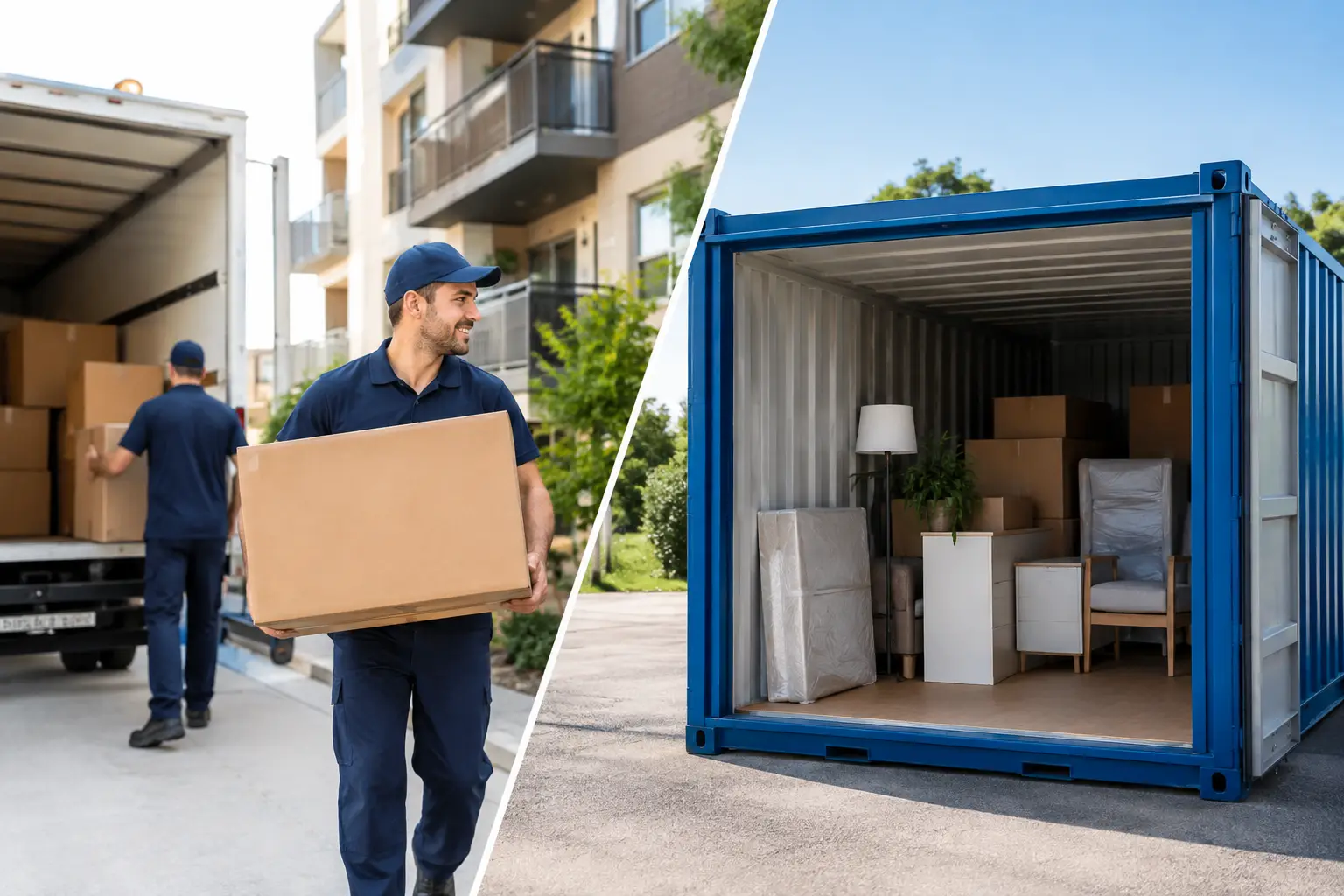
A box that splits open in a parking lot, tips over on an apartment stairwell, or cannot fit through a crowded hallway costs more than a few dollars. The best boxes for apartment moving are not necessarily the biggest or cheapest ones. They are sturdy, easy to carry, sized for what you own, and packed to keep the load manageable for everyone involved.
For most Colorado apartment moves, a practical mix of small, medium, large, specialty, and wardrobe boxes works far better than buying one size in bulk. That mix protects your belongings, makes truck loading more efficient, and helps keep move day on schedule.
What Makes a Moving Box Worth Buying?
A good moving box has strong corrugated cardboard, clean folding seams, and enough structure to hold its stated weight without bowing. New boxes are usually the most dependable choice for books, dishes, electronics, and anything that will be stacked in a truck. They arrive in consistent sizes, which matters when movers are building stable tiers in the truck.
Used boxes can be a smart budget option for lightweight items, especially if they are dry, clean, and still rigid at the corners. The trade-off is that grocery-store boxes, liquor boxes, and boxes saved from online orders vary widely in strength and shape. They may also have weak bottoms, torn handles, or labels that create confusion during unloading.
If you reuse boxes, test the bottom before packing. Run a strip of packing tape across the center seam and up each side, then add a second strip across it. A few extra minutes of taping is much easier than dealing with a broken box halfway down a flight of stairs.
The Best Boxes for Apartment Moving, by Size
Small boxes are for heavy items
Small cartons, often around 1.5 cubic feet, are the workhorses of a well-packed apartment. Use them for books, canned food, tools, small appliances, records, toiletries, and dense kitchen items. Their smaller size prevents a box from becoming too heavy to lift safely.
Books are a common packing mistake. Filling a large box entirely with books can create a load that is difficult to carry and more likely to tear through the bottom. Keep books in small boxes, place them flat or spine-down, and fill open space with lighter items such as linens or towels.
Medium boxes handle most household items
Medium cartons, often near 3 cubic feet, are usually the most useful all-purpose boxes. They work well for pots and pans, pantry items, shoes, folded clothes, toys, office supplies, and framed decor that has been properly wrapped.
For a one-bedroom apartment, medium boxes often make up the largest part of the supply order. They are large enough to reduce the number of boxes you need, but not so large that they become awkward in narrow hallways, elevators, or older apartment buildings with tight turns.
Large boxes are for light, bulky belongings
Large boxes are best for pillows, comforters, bedding, towels, lampshades, winter coats, stuffed animals, and lightweight decor. The rule is simple: the bigger the box, the lighter the contents should be.
Do not use large cartons for dishes, books, or a full load of loose kitchen supplies. A box may technically close, but that does not mean it is safe to lift. A manageable box is less likely to damage its contents, your walls, or someone’s back.
Extra-large boxes have a limited role
Extra-large cartons can be helpful for bulky comforters, oversized pillows, and very light clothing. They are not essential for every move, and they can become difficult to maneuver in small apartments. If your building has a compact elevator or a long interior corridor, more medium boxes may be the better choice.
Specialty Boxes That Save Time and Protect Fragile Items
Specialty boxes cost more than standard cartons, but they can be worthwhile when they prevent damage or make packing much faster.
Dish pack boxes have thicker walls and are designed for breakable kitchen items. Pair them with packing paper, wrap each dish individually, and keep plates upright rather than stacked flat. Glasses should be wrapped and packed vertically, with cushioning on the bottom, sides, and top of the box.
Wardrobe boxes include a metal bar for hanging clothes. They are particularly useful when you are moving quickly, moving during a work week, or dealing with a short gap between leases. Clothes can move directly from closet to box and back to a closet, which reduces folding and re-hanging. They are not the lowest-cost option, so reserve them for items that wrinkle easily or for the clothes you need access to immediately.
Mirror and picture boxes are adjustable pieces that fit around framed art, mirrors, and wall decor. They offer better edge protection than wrapping a frame in a blanket alone. For larger mirrors or glass tabletops, use appropriate padding and clearly label the item as fragile. Never assume a label replaces proper protection.
Mattress bags are also worth considering for apartment moves. They keep mattresses clean while passing through hallways, elevators, loading areas, and truck floors. For upholstered furniture, protective moving pads and plastic wrap can help prevent scuffs, moisture exposure, and fabric snags.
How Many Boxes Does an Apartment Usually Need?
The right quantity depends on how long you have lived in the apartment, how much storage you use, and whether you are packing a home office, hobby equipment, or children’s belongings. A minimalist studio may need far fewer boxes than a heavily furnished one-bedroom with several closets.
As a starting point, a studio often needs roughly 15 to 25 boxes, mostly small and medium. A typical one-bedroom apartment may need 25 to 40 boxes. A two-bedroom apartment can easily require 40 to 65 or more, especially if there is a garage, storage cage, patio closet, or packed kitchen.
Those estimates are only a starting point. Walk through each room before you buy supplies. Count cabinets, shelves, closets, and storage areas, not just visible furniture. Most people underestimate the amount of kitchenware, bathroom supplies, books, and miscellaneous items tucked away in drawers.
It is also wise to buy a small number of extra boxes. Running out on the final night of packing often leads to overfilled cartons, loose bags, and poorly protected items. Unused clean boxes can be saved for storage, shared with a neighbor, or recycled after the move.
Choose Boxes With Your Building in Mind
Apartment moving involves more than getting belongings into a truck. You may need to navigate a reservation-only elevator, stairs, a long breezeway, a busy loading zone, or a limited parking area. Uniform boxes are easier to stack on a dolly and easier to stage near your door without blocking the walkway.
If you are moving in Colorado during winter or spring, protect boxes from moisture. Snow, slush, and sudden rain can weaken cardboard quickly. Keep packed boxes inside until loading begins when possible, and avoid setting them directly on wet pavement. Plastic bins are useful for a few high-priority items, such as important documents, electronics, medications, and essentials you will need the first night.
Plastic totes are durable and reusable, but they have trade-offs. They are heavier than cardboard, can be harder to grip when overfilled, and do not compress or fold down after the move. They work best as part of the supply mix rather than as the only container you use.
Pack Each Box So It Can Be Moved Safely
Start with a taped bottom and place heavier items on the bottom of every box. Fill gaps with packing paper, towels, or soft linens so contents cannot shift. Keep box weights consistent and stop filling when a carton becomes difficult for one person to lift comfortably.
Label the top and at least one side of every box with the destination room and a simple description, such as “Kitchen – mugs and bowls” or “Bedroom – winter clothes.” This helps movers place boxes in the right room without needing to ask at every doorway. For fragile cartons, write “Fragile” and “This Side Up,” but pack them securely enough that they can handle normal transportation.
Avoid packing valuables, passports, lease documents, jewelry, prescription medication, chargers, and essential work items in the general load. Keep those belongings with you. Build a first-night box with toilet paper, basic cleaning supplies, a change of clothes, towels, snacks, and the tools needed to assemble simple furniture.
The right boxes make the entire move calmer before the truck arrives. When your cartons are sturdy, labeled, and sized appropriately, your belongings are easier to protect and your move is easier to manage. If you need reliable help carrying that plan from one apartment to the next, Colorado Apartment Movers is prepared with the truck, equipment, and careful handling to keep moving day straightforward.